
Notes from the IECA annual conference - 2026

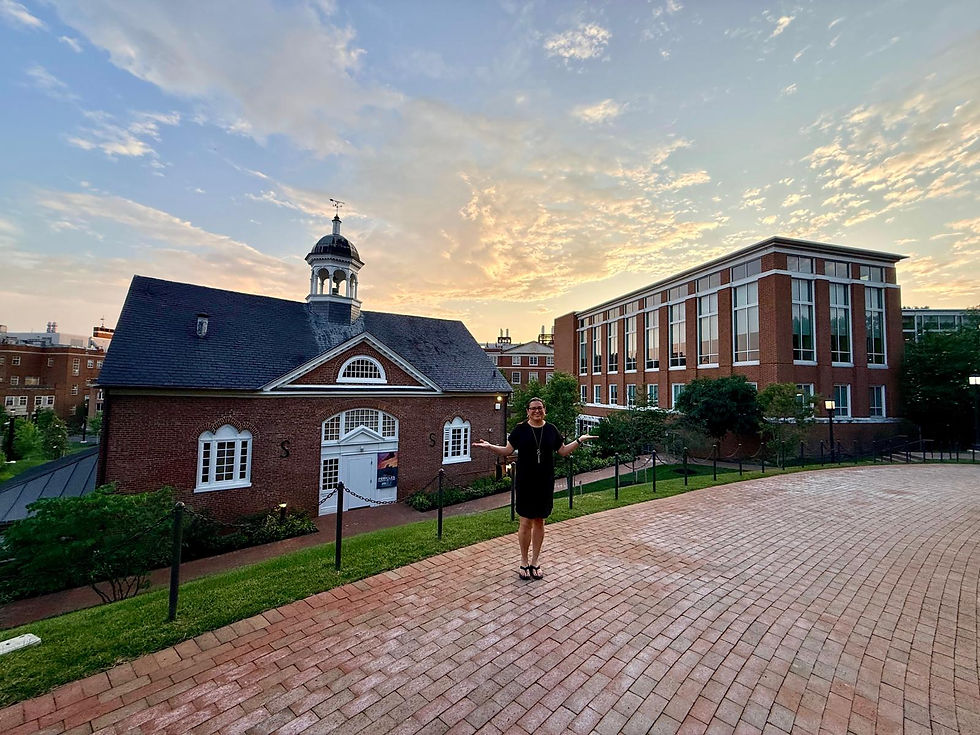
Last week I spent several days at the Independent Educational Consultants Association annual conference. For those of you who may not be familiar with it, IECA brings together a wide variety of independent professionals -- from special education and youth therapy to high school, college, and graduate admissions -- to deepen our expertise, stay current with the latest changes in our fields, and connect with university leaders, admissions officers, and subject matter experts across the board.
As with any conference, the experience comes with a lot of lessons. Here are my highlights.
1. The AI conversation is still evolving… and it’s more nuanced than the headlines suggest
From admissions processes to career advising, AI came up in nearly every room I walked into. The narrative is still very much developing, but a few things are becoming clearer.
Using AI tools without subject matter expertise, or without careful verification, can produce advice that ranges from being misguided enough to be misaligned with your individual goals, to outright wrong. This is especially true in admissions, where context is everything. What's relevant for one student at one school is irrelevant for another. AI doesn't know the difference, and while it collates sometimes hundreds of datapoints, it isn’t built with an educator or counselor’s expertise to align effectively to your path.
At Sendero, because we believe in data-oriented processes, we’re using admissions-vetted data and AI for research (while always checking sources), to help gather helpful case studies (verified applicants, not random inputs), but never for essays writing and definitely not to replace our guidance or judgment.
As for admissions offices themselves, they are using AI, but in more measured ways than you might expect, and very differently across institutions. What's reassuring is that their behavior is actually more predictable than the current news cycle makes it seem. Admissions offices operate on established annual plans. They are constantly responding to university pressures, enrollment needs, and macro trends like ROI questions, shifts in the economy, and changes in policy, but they do so on institutional timelines rather than in reaction to last week's headlines. The fundamentals of what they're looking for in a student haven't changed as dramatically as some would have you believe.
They are, at their core, trying to identify whether a student is a genuine fit for their campus, and they're doing that work as people who care about education, even when sorting application piles under significant pressure. They’re also genuinely interested in identifying the characteristics that align with their organizational purpose-- whether it be serving their in-state populations (think State flagships), advancing knowledge at the intersection of tech and other disciplines (think MIT and CMU), or build multidimensional humanistic communities (like liberal arts colleges).
The fundamentals haven't changed. Students who know themselves, and can articulate that clearly and authentically, are still the ones who stand out.
2. Purpose over passion, and why it matters for your student right now
The opening keynote was delivered by Dr. Belle Liang, a counseling, development and educational psychologist and Boston College professor and co-author, with Timothy Klein, of How to Navigate Life. Her research on purpose development in young people points clearly to what leads to more fulfilling life pathways, and it's the same belief that shapes how we work with students at Sendero.
She distinguishes between three orientations. A performance mindset organizes everything around outcomes: grades, rankings, getting in. A passion mindset says follow what excites you, which sounds freeing until the excitement fades or the road gets hard. A purpose mindset connects what you do to something beyond yourself, to other people, to a contribution that genuinely matters to you.
The research is clear that students operating from purpose are more resilient and more adaptable, in college and beyond. They weather disruption better and recover faster.
This connects directly to the AI question. The college essay is one of the only moments in high school where a student is genuinely asked to reflect on who they are. Skipping that process doesn't just risk producing something generic. It bypasses the very work that builds purpose, and that work has consequences well past decision day.
3. International options deserve a real conversation, with eyes open
As I’ve spoken with some of my students over the years, interest in UK, Canadian, and European universities is genuinely growing, and international universities are responding. To that end, I spent real time this week talking with admissions representatives and attending sessions to understand the landscape better. These systems are often more transparent in their processes, academically rigorous, and significantly less expensive than comparable US options.
While I’m a big enthusiast for these opportunities, two things families should understand before adding these schools to a list. First, international learning environments tend to require a greater degree of personal independence. The academic and social scaffolding that American students often rely on may look very different, or not exist in the same form. Second, students who study abroad should anticipate that their first professional opportunities will largely be rooted in that country at the start of their careers. For the right student, that's an exciting prospect. But it's a factor worth discussing honestly up front, not a surprise after enrollment. And for families, this can also lead to longer term geographic expansion and family migration. Again, this is an exciting prospect for many (I, along with many of the families I work with, come from immigrant backgrounds and have grown massively through these experiences), and while studying abroad as an international student doesn’t mandate this geographic evolution, it simply makes it more plausible.
As I’ve worked with students who have successfully gained admission in the past to UK and Canadian universities, I'm happy to have gone even deeper into supporting families who wish to embrace this option.
Nathalie Galindo-Lee is the founder and Head Coach of Sendero Education, a college admissions coaching practice based in Rockville, MD. Learn more at senderoeducation.com.


Comments